


When your day revolves around getting trucks back on the road—pickup trucks, heavy-duty pickups, vans, and work fleet vehicles—every minute matters.
Oil changes, inspections, brake checks, underbody repairs, and quick maintenance tasks shouldn’t require a full lift bay every time. That’s where high-quality, USA-made automobile ramps earn their keep: they create reliable clearance fast, with a stable platform that helps you work confidently and efficiently.
Whether you run a small shop, manage a service fleet, or maintain vehicles in-house, the right ramps can become one of your most-used tools. Here’s what makes American-made ramps a smart upgrade—and what to look for when you’re choosing ramps for trucks that work for a living.
A properly designed set of ramps delivers immediate access to the underside of a vehicle without complicated setup. You drive up, chock, set the brake, and work. For routine service—fluid checks, oil changes, exhaust inspections, suspension checks, CV boot inspection, and undercarriage cleaning—ramps can be faster than a lift and safer than improvised solutions.
For work trucks and vans, ramps are especially useful when:
Not all ramps are built the same. If you’re using them on pickups, cargo vans, and heavier work vehicles, quality isn’t optional—it’s the difference between smooth daily use and constant second-guessing.
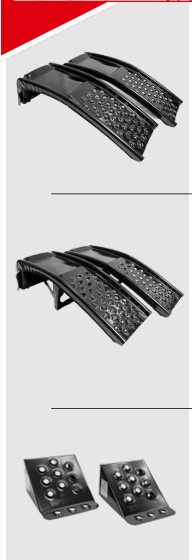
High-quality ramps aren’t just tall—they’re stable. Look for a wide stance, a platform that supports the tire fully, and a design that resists rocking. A solid footprint matters even more on uneven shop floors, parking lots, or job sites.
A good ramp helps prevent “climb slip” during approach and keeps the tire planted once you’re on the platform. That can include aggressive tread surfaces, textured platforms, and anti-skid features on the base. For trucks with all-terrain tires—or wet conditions—traction is a big deal.
Work trucks vary: some sit high, others have air dams, hitch equipment, or loaded suspension that changes the geometry. A ramp with a sensible incline makes it easier to drive up smoothly without scraping, while still giving you useful height.
A “truck ramp” should feel like it belongs under a truck. Durable construction—whether it’s heavy-duty steel or robust composite—should resist flexing, cracking, and deformation over time. USA-made ramps often stand out here because manufacturers are typically more consistent with materials, tolerances, and build standards.
For light trucks and vans, the load rating needs to match your real-world use. Consider the vehicles you actually service—heavy-duty pickups, upfitted vans, work trucks with tool bodies, and loaded fleet vehicles. Choose ramps with capacity headroom, not “just enough.”
Buying American-made isn’t just about the label—it’s about reliability, accountability, and consistency.
If you’re responsible for safety in a shop or a fleet environment, dependable gear is worth the investment.
Even the best ramps are only as safe as the setup. For trucks and vans, wheel chocks are a must-have companion product—especially on sloped surfaces or when you’re working outdoors.
Basic best practices:
This is the difference between ramps being “handy” and ramps being a professional-grade solution.
For pickup trucks, starting from the F-150, F-250, and F-350 heavy-duty pickups, to Sprinter Vans and most other types of work trucks, USA-made high-quality ramps are one of the simplest upgrades you can make to speed up service work and reduce hassle. They’re fast, portable, and effective for the daily tasks that keep fleets running.
If your business depends on uptime—yours or your customers’—choose ramps designed for real working vehicles, pair them with wheel chocks, and build a consistent process around safe setup. It’s a small investment that can save time on every single job.
We EXIST To Save You Money We LOVE Having The Lowest Prices Contractors, Hardware Stores, Disaster Restoration Companies all use
Why Free Plungers Can Bring More Customers to Your Plumbing Business If you’re a new plumber trying to grow your
Products to control a space easily, quickly, visibly, and economically. Wholesale Pricing On High Visibility Barriers and Tapes Products to