

A vacant apartment can cost money every day it remains unprepared for the next tenant. This apartment turnover supply guide is designed for property managers, maintenance teams, and landlords who want to move smoothly from move-out inspection to rent-ready condition without making last-minute trips to purchase essential materials.
The idea is not to stock every product imaginable. Instead, keep a reliable supply of frequently used items that cover most turnover tasks, including cleaning, wall patching, minor hardware repairs, window covering replacements, flooring touch-ups, and basic safety checks. Buying these supplies in practical quantities helps manage expenses while allowing maintenance teams to complete their work without unnecessary delays.
Start With the Scope of the Turn
A quick apartment refresh and a major restoration project require very different supply lists. Before gathering materials, inspect the unit and divide the required work into three categories: essential cleaning, routine repairs, and replacements needed because of damage or normal wear.
For a typical one- or two-bedroom apartment with everyday wear, plan for a thorough cleaning, minor wall touch-ups, hardware adjustments, window covering repairs or replacements, and small flooring fixes. However, units with smoke odors, water damage, extensive wall damage, or missing fixtures will need a separate, project-specific supply order. Keeping these larger jobs separate from your standard turnover inventory helps prevent one challenging unit from using up supplies intended for routine maintenance.
It is also worth keeping finishes and materials consistent throughout the property. When every apartment uses the same blind color, lock style, trash bag size, caulk color and paint sheen, maintenance staff can replace items quickly without having to identify and match different materials for each unit.
Having the right supplies ready before maintenance work begins makes apartment turnovers faster and easier to manage. Use this checklist to organize frequently needed materials and avoid unnecessary trips to the hardware or supply store.

Before marking an apartment as rent-ready, complete a final walkthrough to make sure all cleaning, repairs, and replacements have been finished properly. A quick inspection helps catch overlooked details, reduces maintenance callbacks and creates a better first impression for incoming tenants.
Use the following checklist before handing over the unit:
Cleaning and General Appearance
Repairs and Hardware
Windows and Fixtures
Safety and Final Details
Document and Approve the Unit
Final Tip: Treat the walkthrough as the last quality-control step, not just another inspection. A consistent checklist helps property teams catch small problems before move-in day, reduce repeat maintenance work, and prepare each apartment for its next tenant with greater confidence.
A well-planned apartment turnover supply kit should be based on actual maintenance needs rather than guesswork. Start by reviewing the last 10 to 20 apartment turnovers and noting which supplies your maintenance teams used most often. Items such as toilet seats, doorstops, outlet covers, blind brackets, cabinet pulls, and bathroom caulk are good candidates for your standard inventory when they are regularly needed.
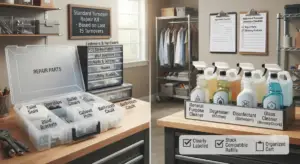
Small repair parts can make a surprisingly big difference in how quickly a unit gets ready. Something as simple as a missing strike plate or an incorrectly sized wall anchor can delay the final inspection, even though the replacement costs very little. Keep commonly used fasteners, nails, screws, anchors, hooks, and utility blades neatly organized in labeled storage bins. This makes it easier for technicians to find what they need without leaving the apartment to search for supplies.
Apply the same practical approach when choosing cleaning products. A general-purpose cleaner is useful for everyday surfaces, but different jobs often require specific products. Keep a degreaser for range hoods and kitchen surfaces, a suitable disinfectant for bathrooms, and a glass cleaner for mirrors and sliding doors. Clearly label each product and stock compatible refill sizes to make replenishment easier. This simple system reduces unnecessary purchases, limits half-empty bottles, and helps keep maintenance carts and storage closets consistently organized.
A damaged or mismatched window covering can hold up a unit turn, make a classroom harder to use, or leave
DIY Painting Tools and Supplies for Contractors # DIY Painters Tools for Reliable Property Turnovers A repaint can be one
A vacant unit costs money every day it sits unfinished. The best rental property turnover checklist is not a generic