

A vacant apartment can cost money every day it remains unprepared for the next tenant. This apartment turnover supply guide is designed for property managers, maintenance teams, and landlords who want to move smoothly from move-out inspection to rent-ready condition without making last-minute trips to purchase essential materials.
The idea is not to stock every product imaginable. Instead, keep a reliable supply of frequently used items that cover most turnover tasks, including cleaning, wall patching, minor hardware repairs, window covering replacements, flooring touch-ups, and basic safety checks. Buying these supplies in practical quantities helps manage expenses while allowing maintenance teams to complete their work without unnecessary delays.
Start With the Scope of the Turn
A quick apartment refresh and a major restoration project require very different supply lists. Before gathering materials, inspect the unit and divide the required work into three categories: essential cleaning, routine repairs, and replacements needed because of damage or normal wear.
For a typical one- or two-bedroom apartment with everyday wear, plan for a thorough cleaning, minor wall touch-ups, hardware adjustments, window covering repairs or replacements, and small flooring fixes. However, units with smoke odors, water damage, extensive wall damage, or missing fixtures will need a separate, project-specific supply order. Keeping these larger jobs separate from your standard turnover inventory helps prevent one challenging unit from using up supplies intended for routine maintenance.
It is also worth keeping finishes and materials consistent throughout the property. When every apartment uses the same blind color, lock style, trash bag size, caulk color, and paint sheen, maintenance staff can replace items quickly without having to identify and match different materials for each unit.
Having the right supplies ready before maintenance work begins makes apartment turnovers faster and easier to manage. Use this checklist to organize frequently needed materials and avoid unnecessary trips to the hardware or supply store.
Before marking an apartment as rent-ready, complete a final walkthrough to make sure all cleaning, repairs, and replacements have been finished properly. A quick inspection helps catch overlooked details, reduces maintenance callbacks, and creates a better first impression for incoming tenants.
Use the following checklist before handing over the unit:
Final Tip: Treat the walkthrough as the last quality-control step, not just another inspection. A consistent checklist helps property teams catch small problems before move-in day, reduce repeat maintenance work, and prepare each apartment for its next tenant with greater confidence.
A well-planned apartment turnover supply kit should be based on actual maintenance needs rather than guesswork. Start by reviewing the last 10 to 20 apartment turnovers and noting which supplies your maintenance teams used most often. Items such as toilet seats, doorstops, outlet covers, blind brackets, cabinet pulls, and bathroom caulk are good candidates for your standard inventory when they are regularly needed.
Small repair parts can make a surprisingly big difference in how quickly a unit gets ready. Something as simple as a missing strike plate or an incorrectly sized wall anchor can delay the final inspection, even though the replacement costs very little. Keep commonly used fasteners, nails, screws, anchors, hooks, and utility blades neatly organized in labeled storage bins. This makes it easier for technicians to find what they need without leaving the apartment to search for supplies.
Apply the same practical approach when choosing cleaning products. A general-purpose cleaner is useful for everyday surfaces, but different jobs often require specific products. Keep a degreaser for range hoods and kitchen surfaces, a suitable disinfectant for bathrooms, and a glass cleaner for mirrors and sliding doors. Clearly label each product and stock compatible refill sizes to make replenishment easier. This simple system reduces unnecessary purchases, limits half-empty bottles, and helps keep maintenance carts and storage closets consistently organized.
window shades, roller shades, final turnover walkthrough, property inspection, home handover, real estate, property management, interior design
Managing apartment turnovers efficiently requires having the right materials on hand before a unit becomes vacant. Without a structured supply plan, maintenance crews waste valuable hours running to hardware stores or waiting on delayed shipments. Below is a practical framework to organize your apartment turnover inventory, control costs, and keep units move-in ready.
Blinds are one of the most common turnover replacements. Bent slats, broken cords, missing valance clips, damaged mounting brackets, and stained fabric shades can make an otherwise clean unit look neglected.
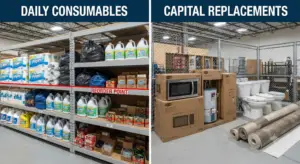
Routine turnover supplies are consumed or installed quickly, whereas major replacements carry higher costs and require separate tracking.
| Category | Examples | Purchasing & Tracking Strategy |
| Daily Consumables | Trash bags, tape, caulk, cleaning chemicals, spackle, roller covers, screws, batteries, touch-up paint | Keep in regular stock for predictable per-unit material costs. |
| Capital Replacements | Appliances, vanities, toilets, doors, major flooring, HVAC parts | Code to the specific unit and cause (damage, age, or upgrade) to keep routine budgets accurate. |
| Crew Tools | Hand tools, extension cords, step ladders, scrapers, utility knives, shop equipment | Do not treat as per-unit consumables; inspect and replace on a scheduled basis. |
A single-unit order works for rough estimates, but multi-family operations need stock levels that support several simultaneous turns.
Poor inventory habits usually fall into two expensive traps:
Pro Tip for Storage: Label shelves by category, track fast-moving items, and rotate stock (First-In, First-Out). Regularly check expiration dates and storage conditions for chemicals and adhesives, and remove damaged or unlabeled items from active inventory.
A turnover is not complete when repairs end. Use your final walk-through checklist to verify:
Use Inspection Data to Improve Orders: If the same repair item repeatedly appears on punch lists, add it to your standard stock or upgrade to a more durable product grade.
The most effective turnover inventory is the one that keeps your next unit moving without delays. By tracking what crews actually consume, keeping recurring essentials within reach, and reserving special orders for true exceptions, you can cut vacancy downtime significantly.
For property managers looking to simplify purchasing, Mazer Wholesale brings everyday maintenance, cleaning, hardware, blinds, flooring, and jobsite supplies together into one reliable wholesale source.
Kya aap is blog ke liye Image Alt Tags aur Social Media Captions bhi chahte hain?
A vacant apartment can cost money every day it remains unprepared for the next tenant. This apartment turnover supply guide
A damaged or mismatched window covering can hold up a unit turn, make a classroom harder to use, or leave
DIY Painting Tools and Supplies for Contractors # DIY Painters Tools for Reliable Property Turnovers A repaint can be one